Painting Watercolor Fruit: 15 Creative Fruit Ideas
I still remember my very first attempt at painting a bowl of fruit. If I am being completely honest, the results looked less like a delicious, mouth-watering still life and a lot more like a collection of colorful, sad blobs.
I thought it would be fitting to start with an apple, but I severely underestimated how complex a simple piece of fruit could be.
But I warn you, once you start painting watercolor fruit, it becomes an absolute obsession. There is something deeply satisfying about dropping a bright wash of crimson onto a wet page and watching it bloom into a perfectly ripe strawberry.
Watercolor is practically made for painting fruit. The medium is fluid, unpredictable, and organic—just like the subjects themselves.
If you want to bring a little sweetness to your sketchbook, you are in the right place.
We are going to explore the unique characteristics of painting different types of fruit, celebrating the quirks and textures that make each one so incredibly fun to capture on paper.
Why We Love Painting Nature’s Candy
Fruit offers an endless playground for watercolor artists. You get to play with intense pigments, experiment with light and shadow, and practice your wet-on-wet techniques without the strict pressures of architectural perspective or human anatomy.
Whether you are a beginner trying to master smooth color gradients or an experienced artist looking for a relaxing weekend project, fruit is the perfect subject.
Let’s dive into some of my absolute favorites to paint.
A Fruit Bowl of Inspiration
Apples
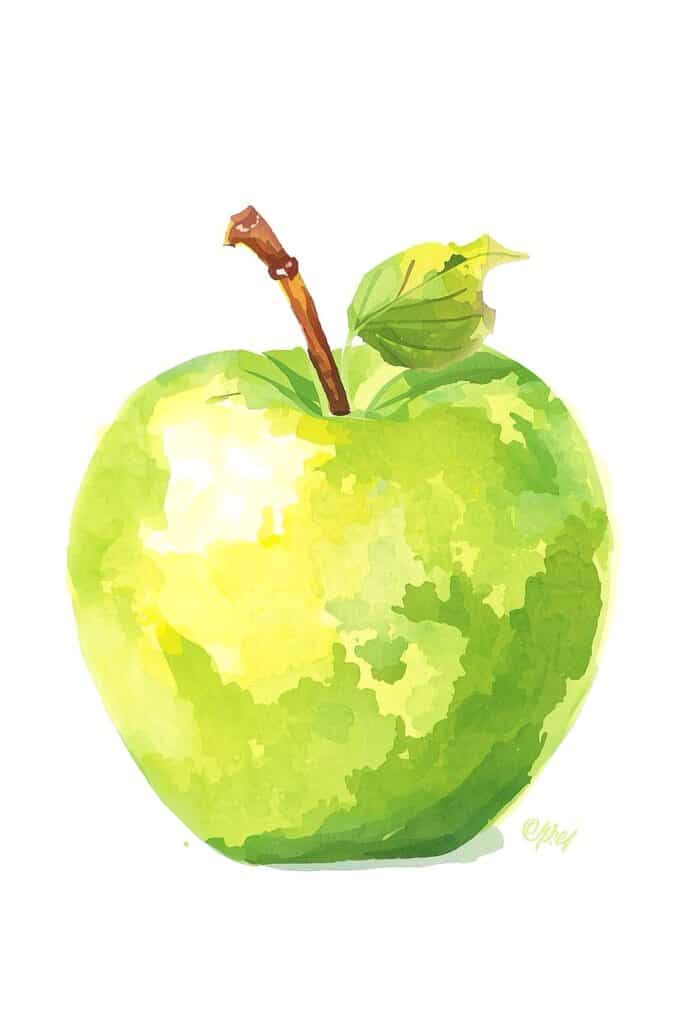
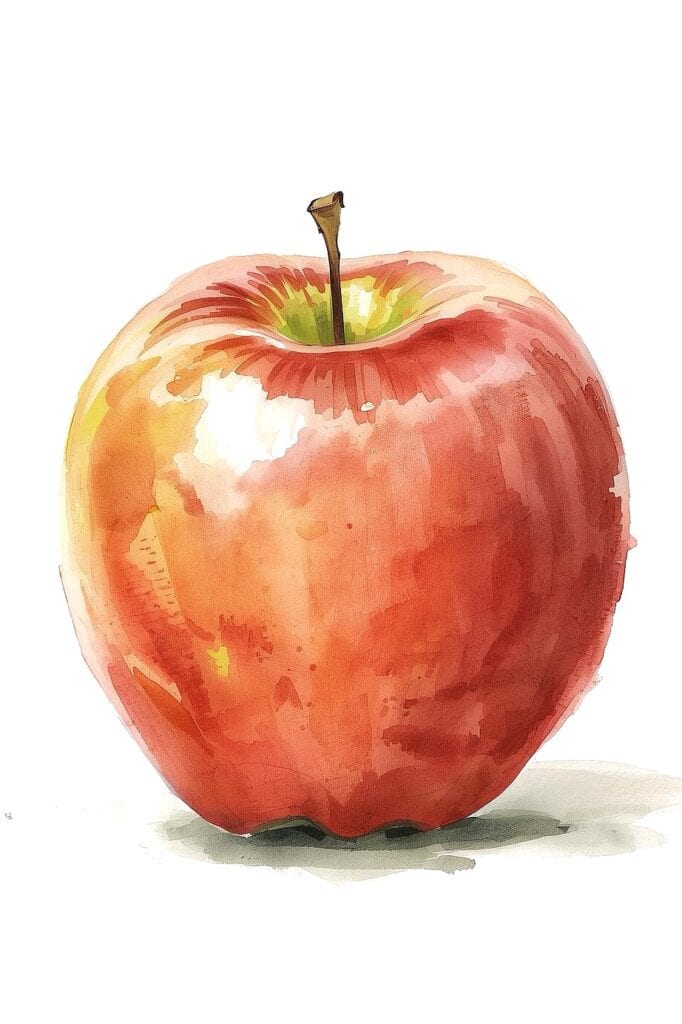
Apples are the undisputed classic of the still-life world. When you paint an apple, you are really painting a masterclass in form and lighting.
The trick here is to preserve that crisp, bright white highlight where the light hits the shiny skin.
I love dropping in unexpected colors into the shadows of an apple—think deep blues or cool purples—to make the red or green skin pop even more. They are simple in shape, but they hold so much character.



Pears
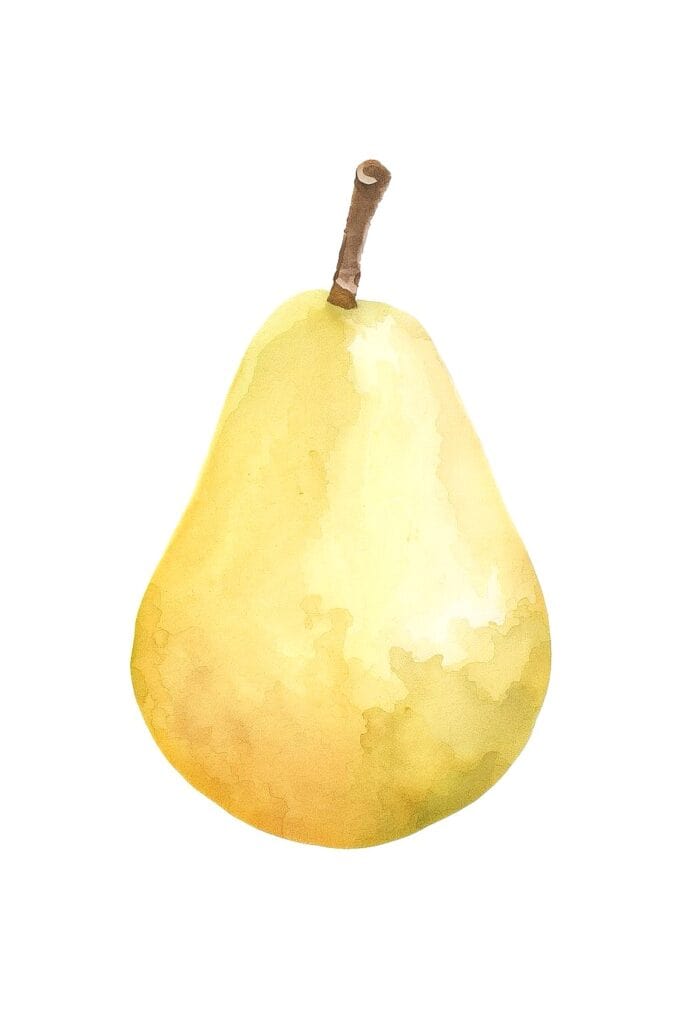
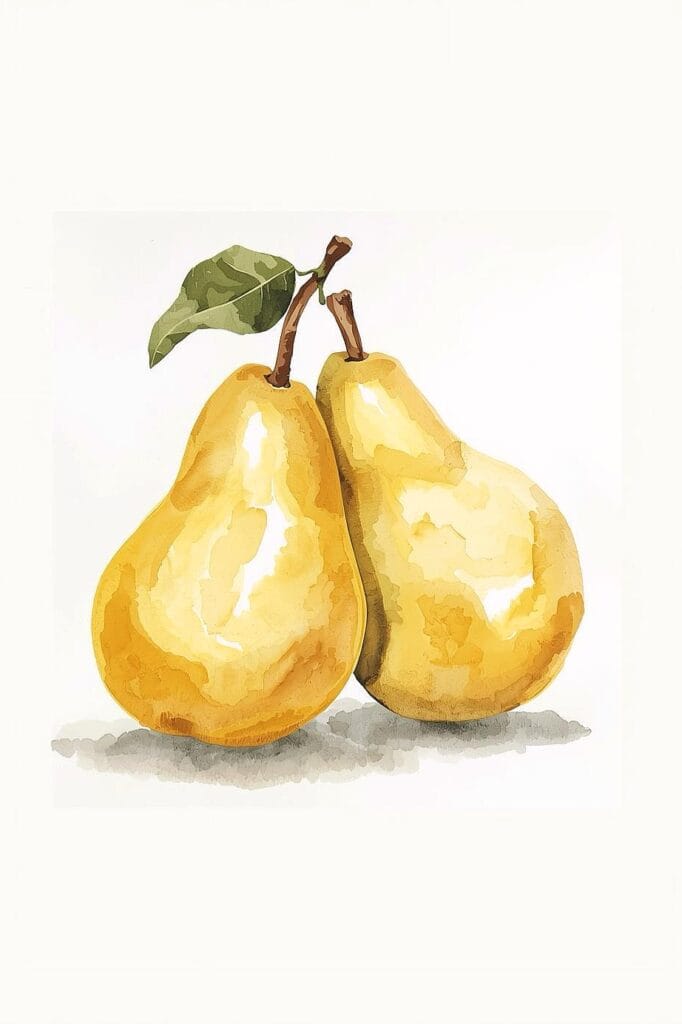
Pears have an elegance that makes them a joy to sketch and paint. Their bottom-heavy, bell-like curves are inherently graceful. What I love most about pears is their texture.
They aren’t perfectly smooth like apples. You can use the wet-on-dry technique to add those tiny, charming speckles and slight bruises that give a pear its earthy, organic feel.
A wash of yellow-green mixed with a touch of warm ochre works wonders here.



Grapes
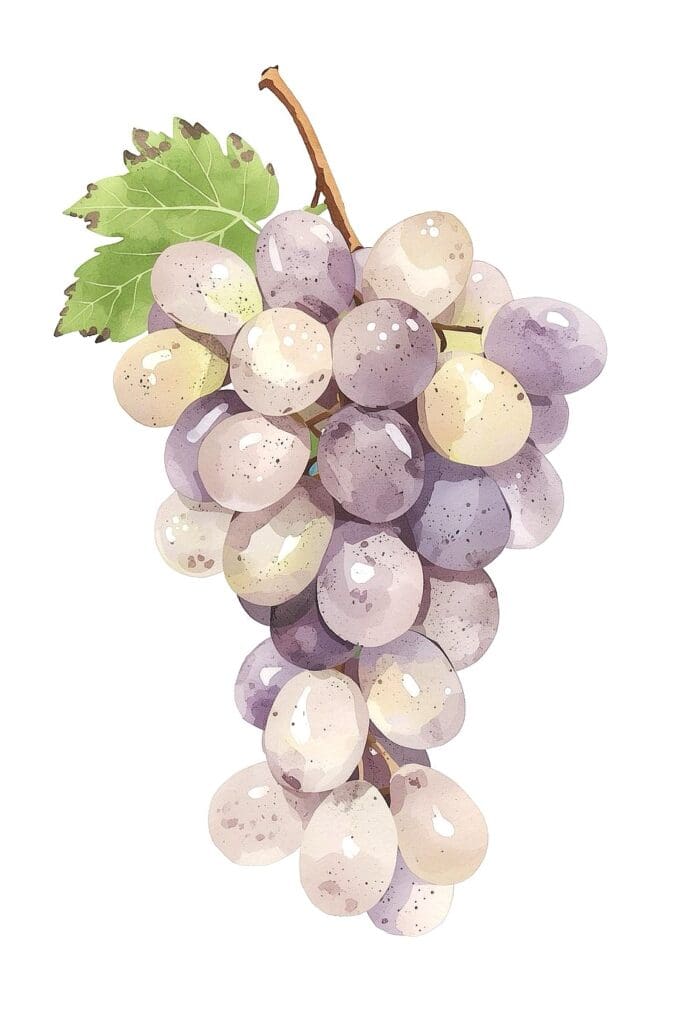
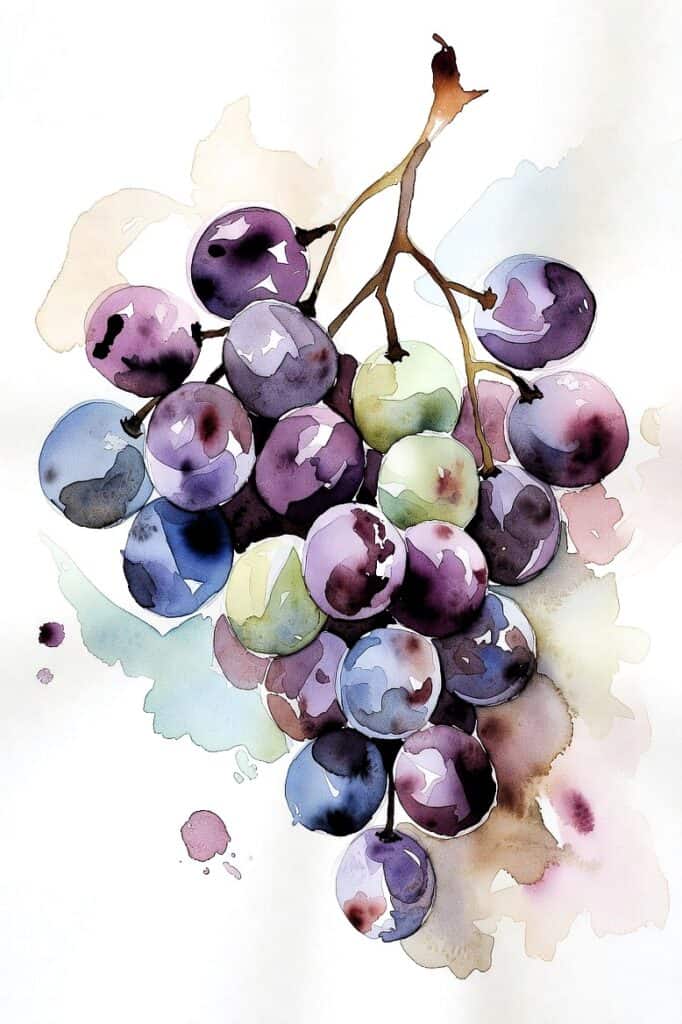
Get ready for a little shock: painting grapes is actually an exercise in painting light. A cluster of grapes might look intimidating, but you don’t need to paint every single one in perfect detail.
Instead, focus on the overall shape of the bunch. Let the colors bleed together—shifting from deep violet to soft lavender or pale translucent green.
The secret is capturing the “bloom,” that soft, powdery film on the skin, by keeping your edges soft and your colors slightly muted.


Melons
Is there anything more summery than a bright slice of melon?
Whether you are painting a wedge of watermelon with its shocking pink flesh and stark green rind, or the warm, textured orange of a cantaloupe, melons are pure joy.
Because melons are so juicy, I love using a very wet brush to mimic that watery texture. You can even drop a little salt onto the wet paint to create the fascinating, coarse texture of the fruit’s interior.


Oranges
Oranges are vibrant, warm, and delightfully textured. The challenge with citrus is capturing the dimpled, porous nature of the rind.
I usually start with a bright, sunny wash of yellow-orange. Once that is slightly dry, I will dab in thicker, darker orange pigments to suggest the pitted surface.
If you are painting a sliced orange, the geometric, stained-glass look of the segments provides a wonderfully structured contrast to the round outer peel.


Mixed Fruit
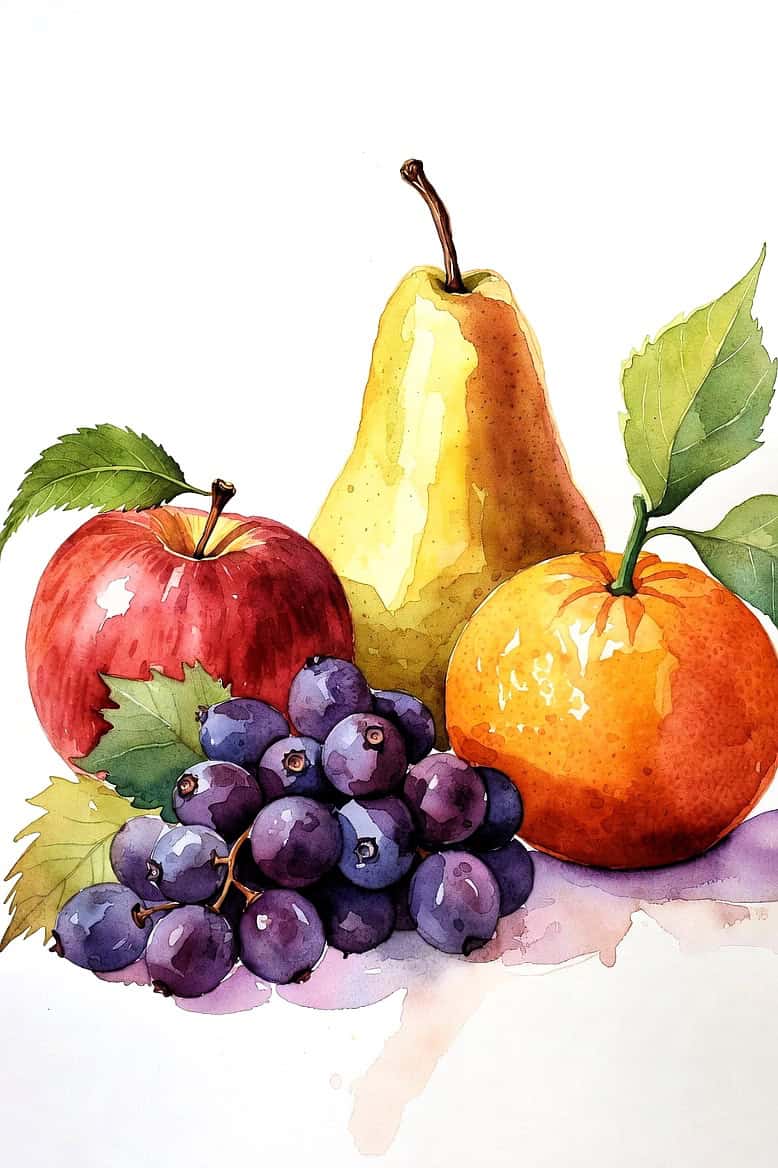
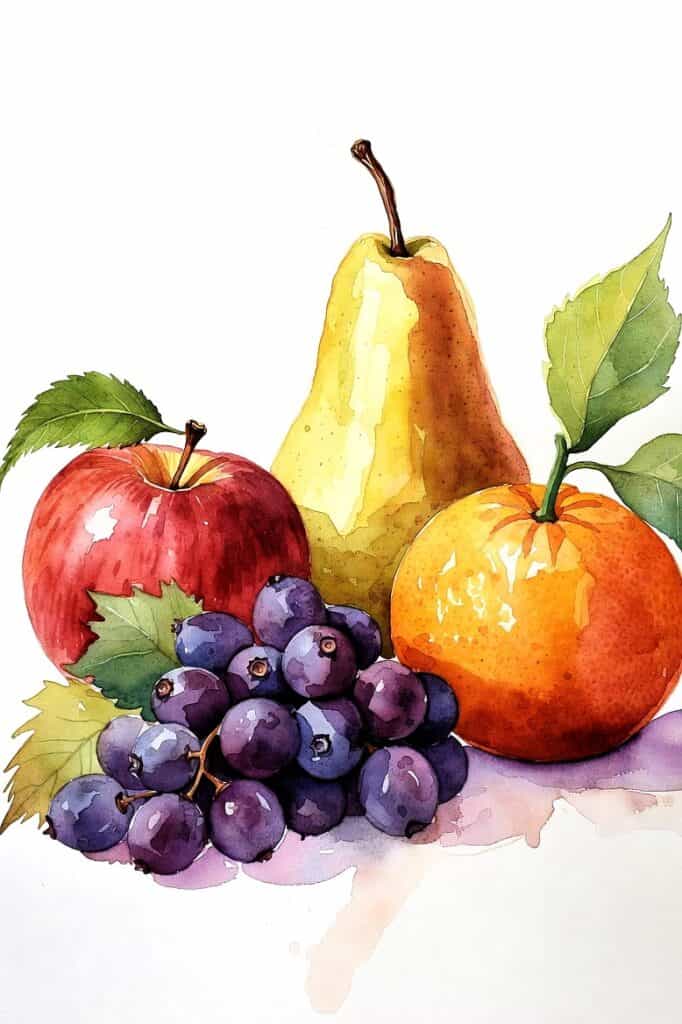
Talk about a beautiful, chaotic harmony. Painting a mixed fruit arrangement forces you to think about color composition.
How does the cool purple of a plum sit next to the warm yellow of a banana? When painting mixed fruit, I let the shadows connect the pieces.
It grounds the arrangement and makes it look like a cohesive scene rather than floating objects. It is a fantastic way to practice balancing warm and cool tones.



Peaches and Nectarines
These two might be cousins, but they demand different approaches. For peaches, you want to capture that soft, matte fuzz.
I use a very soft brush and a wet-on-wet technique, allowing gradients of peachy-pink and golden yellow to merge seamlessly on the paper without any hard edges.
Nectarines, on the other hand, are smooth and glossy. You can treat them almost like you would an apple, leaving distinct, sharp highlights to show off their smooth skin.


Lemons
Lemons are sunshine on paper. But here is a tip I had to learn the hard way: do not shade your lemons with black.
Shading yellow with black or gray just makes it look dirty.
Instead, use a complementary color like a very pale, watery purple or a warm, earthy brown for the shadows. This keeps the yellow looking vibrant, zesty, and fresh.


Plums
The color depth you can achieve with a plum is simply stunning. You can push your pigments to the absolute limit, using rich indigo, deep crimson, and dark violet.
Plums have a very smooth, taut skin, so leaving a bold, bright highlight is essential to give them that three-dimensional volume.
I love letting the dark colors pool at the bottom of the fruit to create a heavy, grounded shadow.


Exotic Fruit
If you are feeling adventurous, exotic fruits are where you can let your imagination run wild.
Think of the crazy, scale-like exterior of a dragonfruit with its shocking magenta and neon green tips.
Or the jewel-like seeds of a cut pomegranate. Exotic fruits often have unusual textures and highly saturated colors that give you an excuse to pull out those intensely bright pigments you rarely use.


Bananas
Bananas are far more interesting to paint than you might think. A perfectly yellow banana is a bit boring, isn’t it?
The real fun happens when you paint a ripening banana. You get to mix soft greens at the stem, warm buttery yellows in the center, and a fascinating array of browns and blacks for the spots and bruises.
It is a great exercise in storytelling through painting.


Strawberries
Strawberries are tiny, bright, and incredibly detailed.
The classic mistake is to paint the fruit red and then dot it with black seeds. Instead, look closely at a strawberry. The seeds are actually set into little dimples in the flesh.
I like to paint the red wash, leave tiny specks of white paper for the highlights near the seeds, and then drop a tiny bit of shadow into the dimples once the red is dry. It is meticulous work, but the payoff is a luscious, realistic berry.


Cherries
Cherries are like little glass beads. They are so glossy and reflective that they almost look artificial.
To capture this, your highlights need to be sharp and deliberate. I love dropping a highly concentrated, rich red right next to a stark white highlight. The contrast makes the cherry look incredibly plump and shiny.
Don’t forget the stems—a quick, confident sweep of a thin brush in pale green grounds the fruit perfectly.


Blueberries
Much like grapes, blueberries have that lovely, dusty bloom on their skin. You rarely paint a blueberry with a flat, pure blue.
They are a mixture of cerulean, violet, and sometimes even a hint of magenta.
Painting a handful of blueberries is a great way to practice painting overlapping circles and figuring out which berries are in the light and which are falling into the shadow.


Figs
Figs are an absolute delight, especially when painted cut open. The outside is a moody, dusty purple-green, often shaped like a soft teardrop. But the inside?
That is where the magic happens.
The interior of a fig is a jammy, textured burst of crimson and pink. Using a stippling motion with your brush can help replicate the seedy, rich texture of the fruit’s center.


Pick Up Your Brush and Paint
Painting watercolor fruit isn’t just about creating a perfect botanical illustration; it is about capturing the feeling, the juiciness, and the vibrant life of the food we eat.
The next time you are feeling uninspired, look no further than your kitchen counter. Grab an apple, a lemon, or a handful of berries, and let the colors flow. You will be amazed at the beautiful, delicious art you can create.