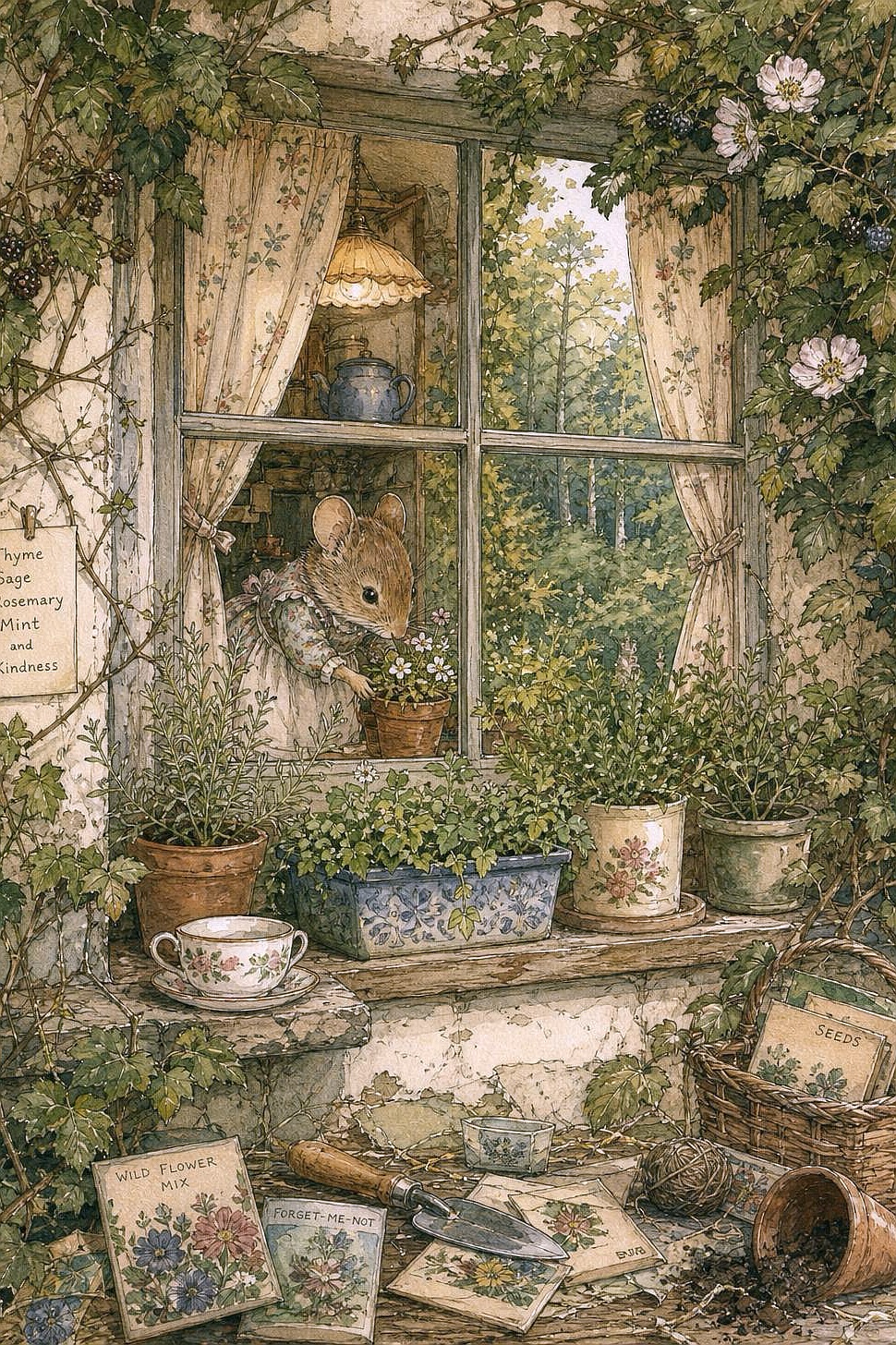
24 Art Pieces Inspired by Jill Barklem and Brambly Hedge Illustrations
There is something almost impossible to resist about Brambly Hedge illustrations and the gentle world Jill Barklem created around them. The tiny homes tucked into roots and hedgerows, the warm rooms full of books and teacups, the careful seasonal details, and the soft woodland charm all feel like they belong to a quieter, kinder kind of story.
If you love storybook art, you probably know that feeling already. One glance at a cozy pantry shelf or a candlelit mouse-sized sitting room, and suddenly you want to linger there for a while.
What makes this style so beloved is not just that it is pretty. It feels lived-in. Every folded blanket, jam jar, flower pot, and little window suggests that life is happening just beyond the page.
That is part of why Jill Barklem inspired art still feels so magical for artists and readers alike. It captures a world that is tiny, detailed, and full of care.
This post is all about art inspiration and cozy storybook aesthetics, not official Brambly Hedge artwork.
Think of it as a curated look at the visual ideas, textures, moods, and tiny details that make this kind of vintage children’s book illustration so endlessly inspiring.
If you are gathering references for woodland illustration, saving ideas for a moodboard, or simply in the mood for some cozy art inspiration, you are in the right place. And if Beatrix Potter is more you thing then I got you covered there with 70 Inspired Art Pieces By Beatrix Potter Illustrations.
What Makes Jill Barklem and Brambly Hedge Illustrations So Inspiring?
The magic of this style comes from how many things it blends so naturally. You have nature, of course, but not in a distant landscape way. Nature feels close, useful, and woven into daily life.
Roots become walls.
Flowers become decorations.
Leaves, berries, acorns, and moss all feel like part of the architecture.
That is a big reason Brambly Hedge inspired art feels so rich. It turns the outdoors into home.
Then there are the interiors, which might be my favorite part. These rooms are not empty backdrops. They are full of personality. Every chair, shelf, pantry jar, curtain, and teacup helps tell a story.
The colors matter too. Soft creams, mossy greens, berry reds, dusty blues, and warm browns create that timeless storybook mood.
Nothing feels too bright or too polished. Instead, the palette gives the whole scene a quiet glow that works beautifully in cottagecore and whimsical animal art, and storybook illustration.
Art Pieces Inspired by Jill Barklem and Brambly Hedge Illustrations
Below is a curated inspiration gallery filled with themes that capture the warmth, detail, and woodland charm so many readers love. These image ideas can work as creative sparks for storybook-style illustration, cozy woodland scenes, soft animal portraits, and nostalgic interiors with a cozy vintage illustration feel.
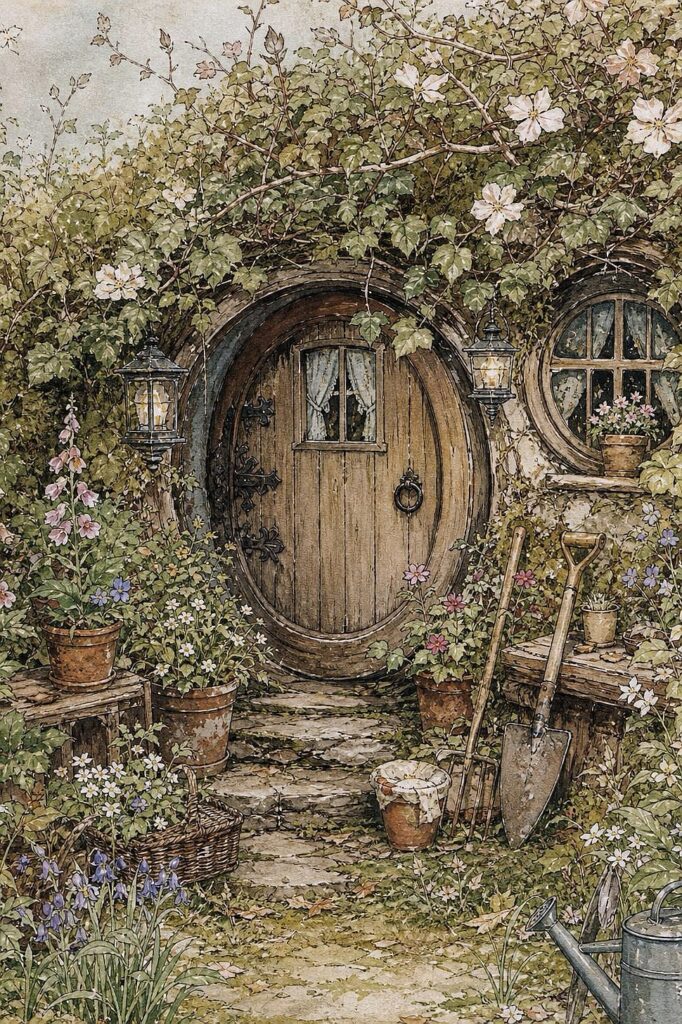
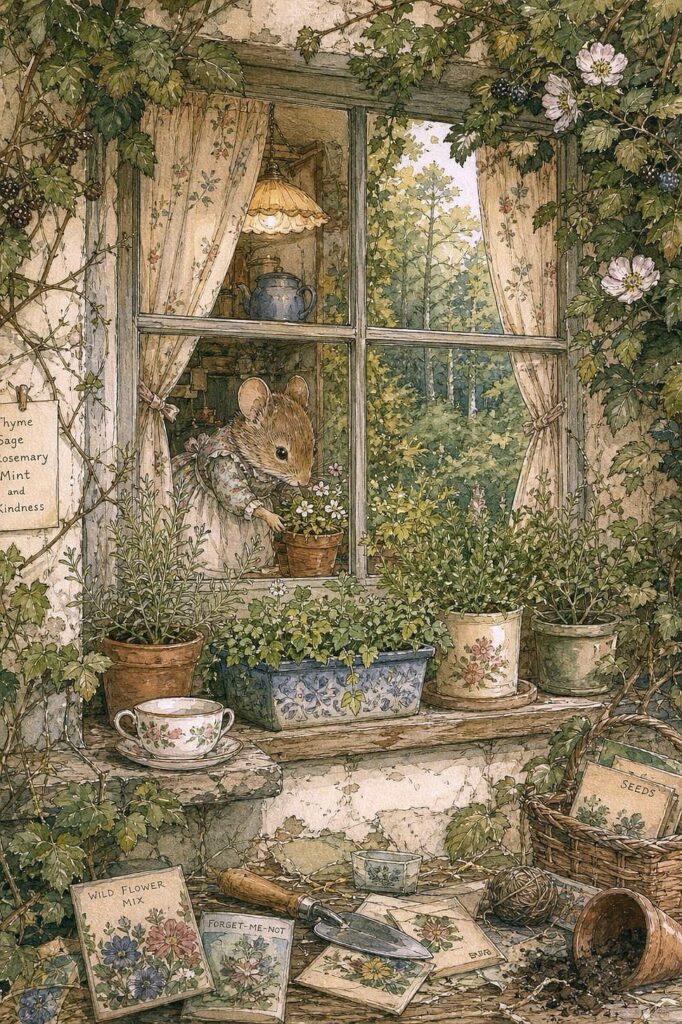
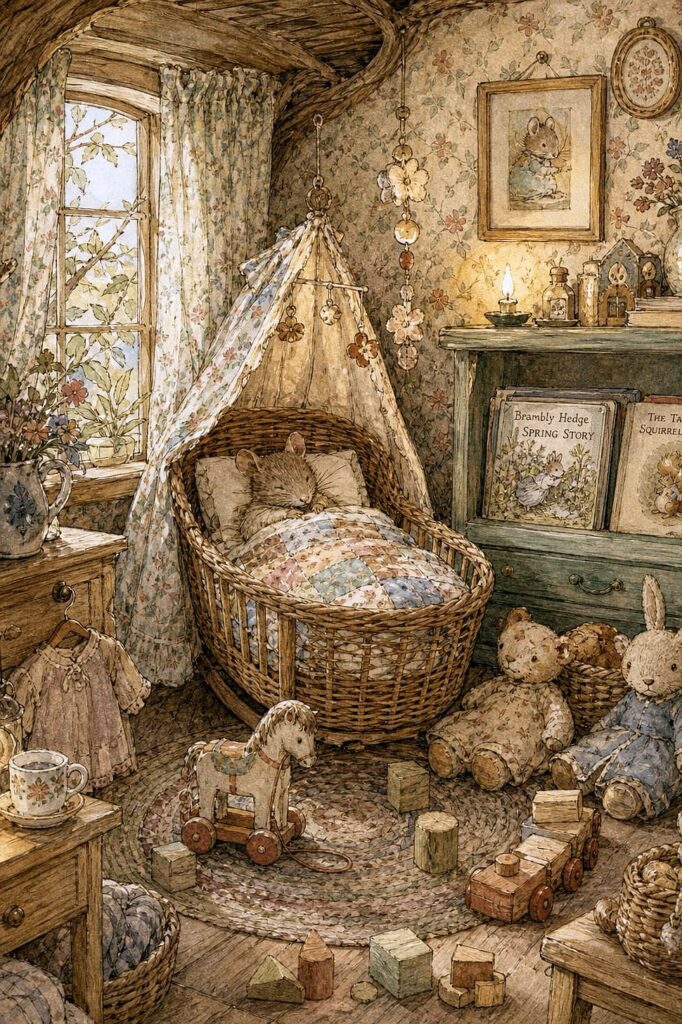
If you are an artist, notice what keeps drawing your eye back. Sometimes it is not the whole scene but one tiny thing: a shelf of labeled jars, a flowered curtain, a glowing window, or a little path through the garden. Those details are often what make Jill Barklem inspired art so memorable.
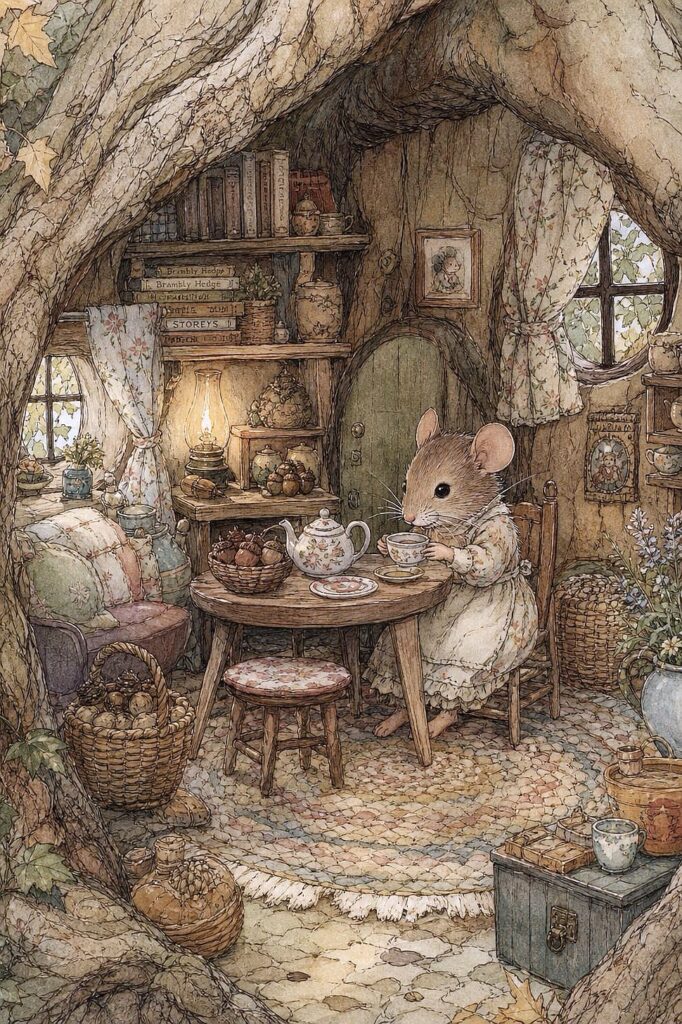
Cozy Mouse House Interiors
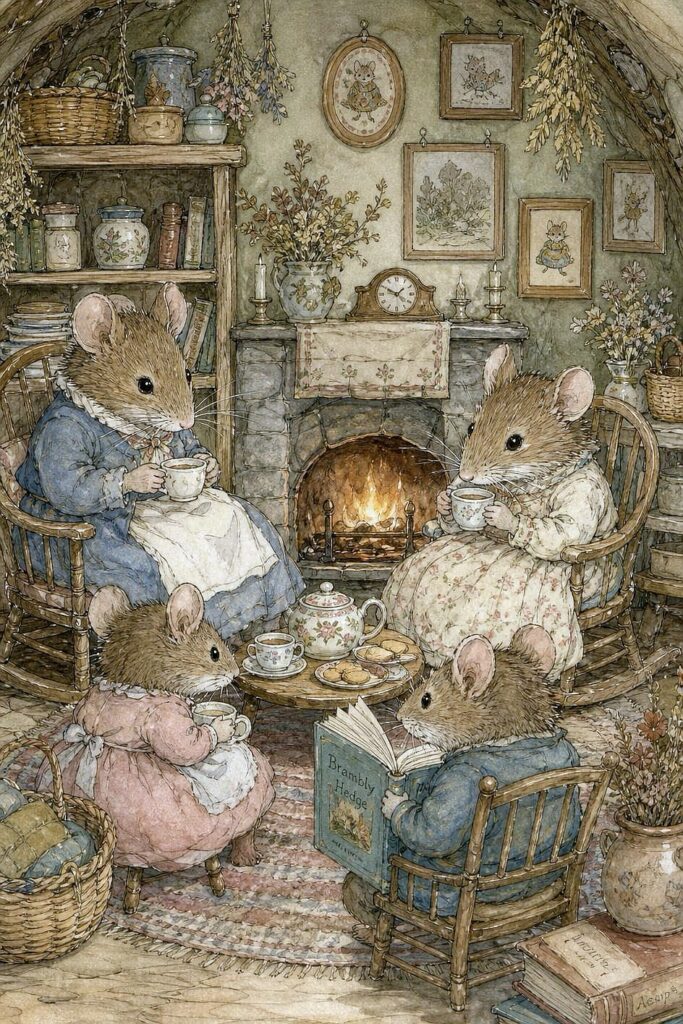
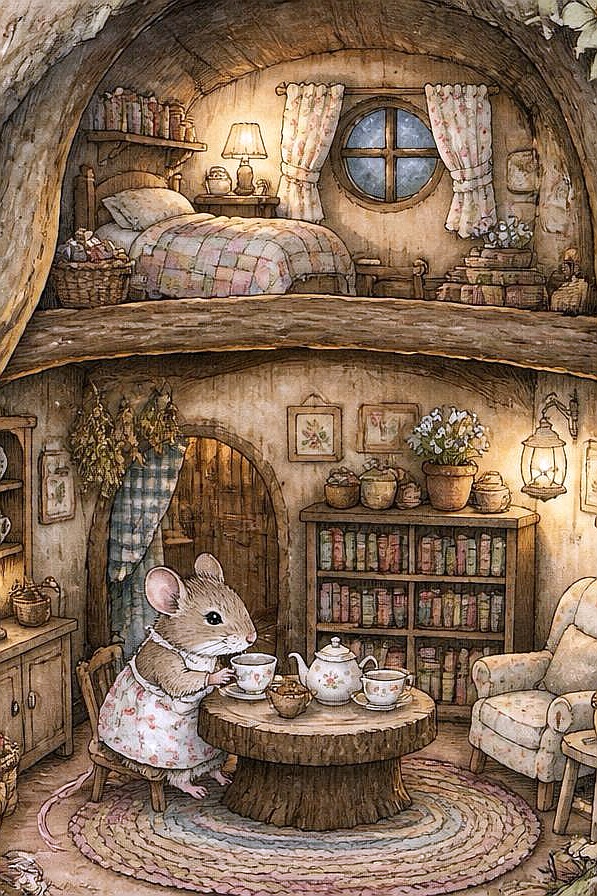
Tiny interiors are one of the most charming parts of this whole aesthetic. A room built inside a tree root or hidden behind a woodland wall instantly feels magical, but it is the everyday comforts that really make it work. Warm lamplight, little beds, shelves full of books, and a rug that looks slightly worn all help create that feeling of safety and story.
I think this kind of scene is especially useful for artists because it shows how much personality can live in a small space. When a room includes handmade touches, teacups on a shelf, flower curtains, or a chair pulled slightly away from the table, it starts to feel less like a set and more like a life.
Woodland Kitchens and Pantry Scenes
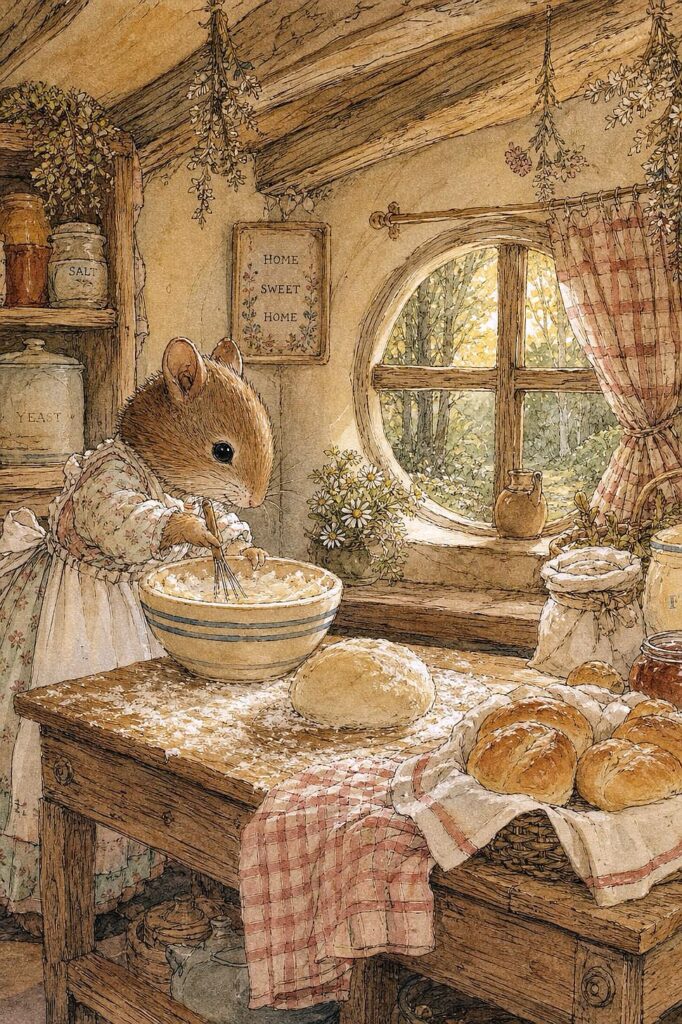
There is something deeply satisfying about a storybook kitchen, especially one filled with practical little details. Jars, baskets, bread, herbs, and hanging pots all make the scene feel useful and comforting at the same time. You are not just looking at a pretty room. You are looking at a place where things are made, stored, shared, and enjoyed.
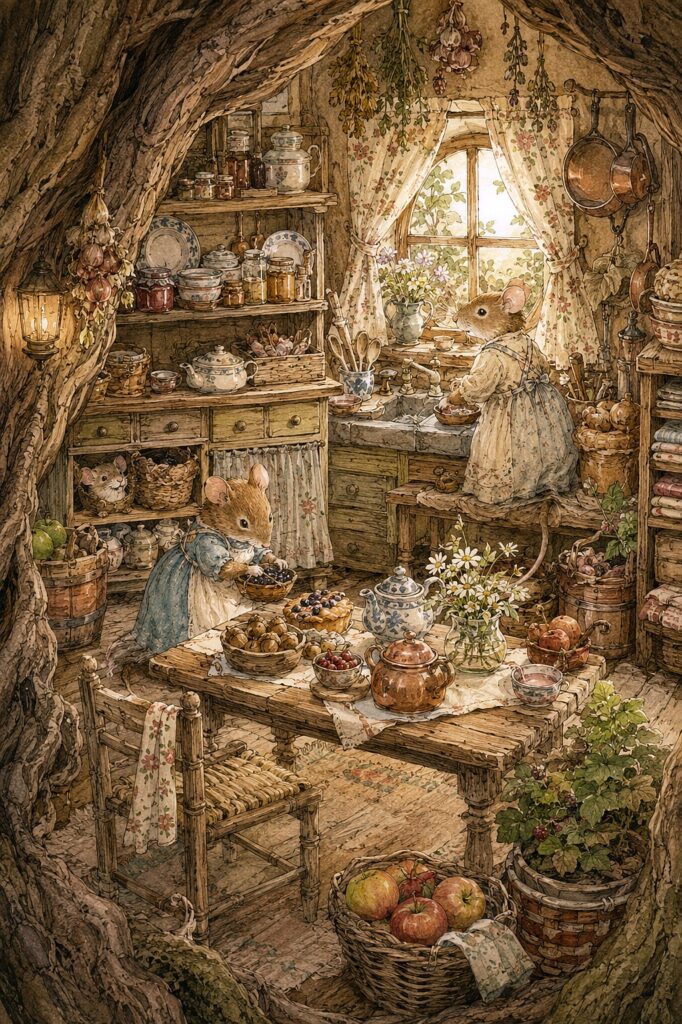
Pantries are especially lovely in woodland illustration because they combine order and abundance. Labeled jars, flour sacks, bunches of herbs, and tiny dishes create a sense of care. It is one of those themes that Pinterest readers save quickly because it feels both decorative and lived-in.
Seasonal Brambly Hedge-Inspired Art
Seasonal details are a huge part of what gives this aesthetic its emotional pull. Spring blossoms feel hopeful.
Summer berries feel full and bright.
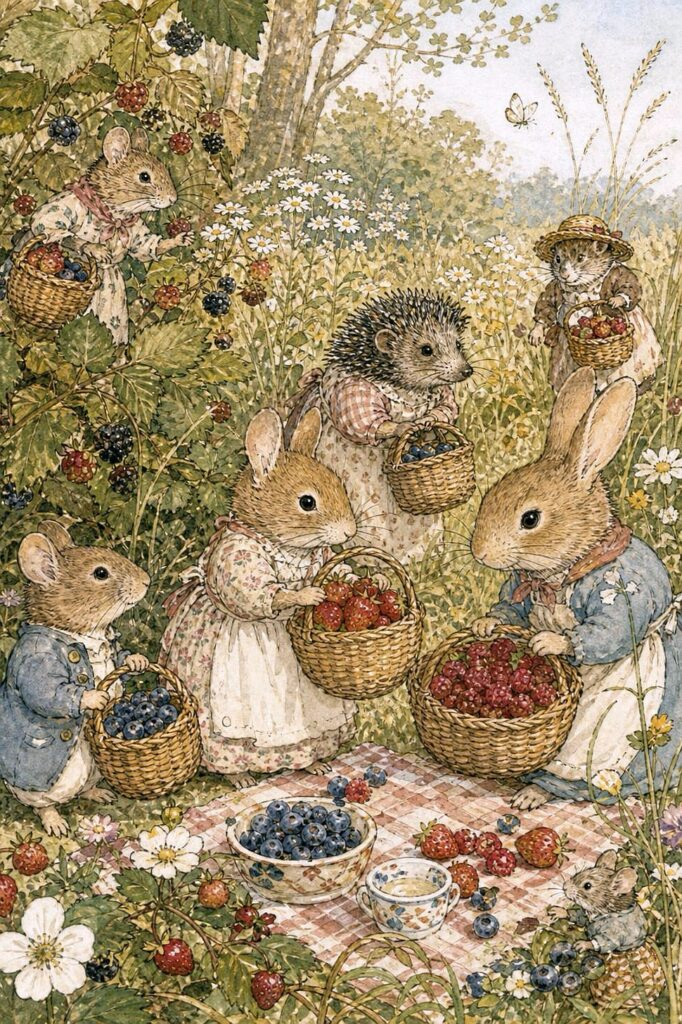
Autumn leaves and harvest baskets bring warmth and richness.
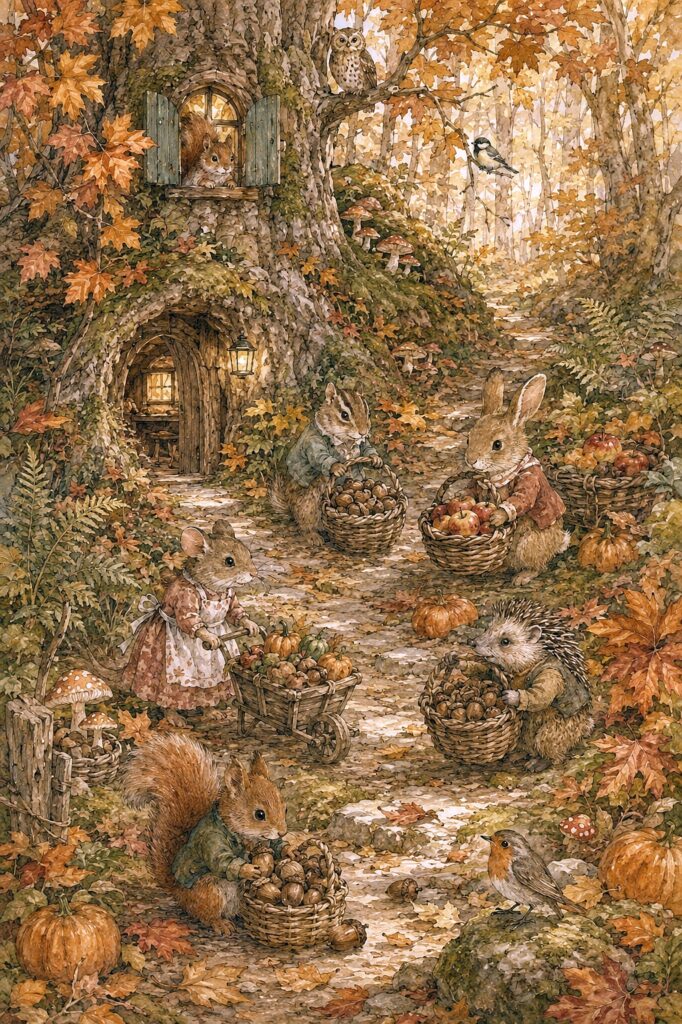
Winter scenes, with snow at the window and candlelight inside, feel especially nostalgic. That changing rhythm is part of what makes these images feel like a whole world instead of one isolated picture.
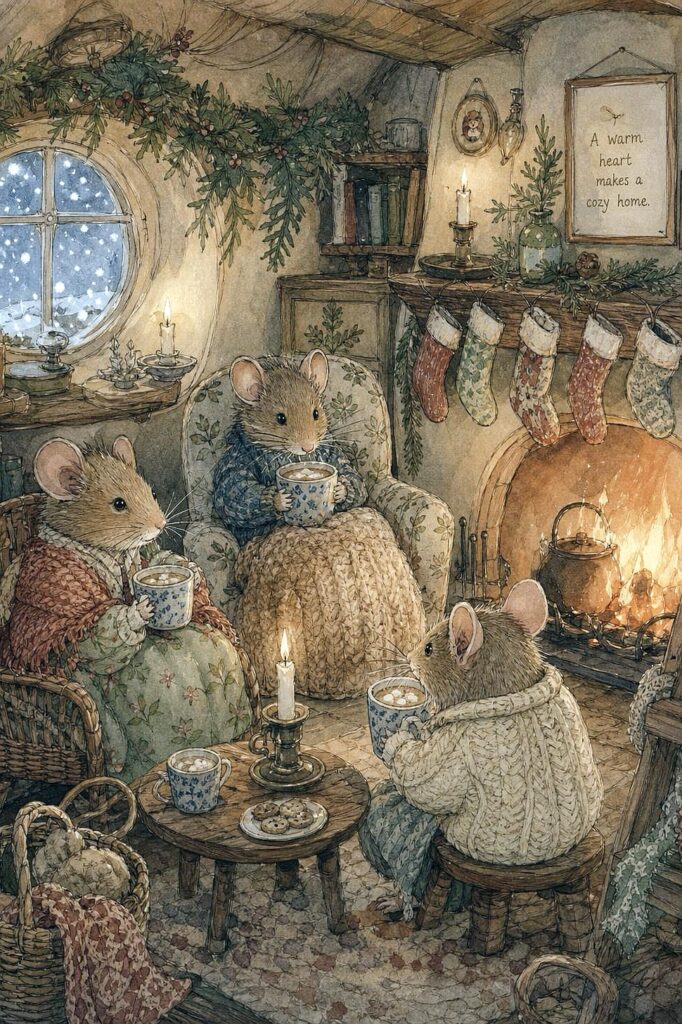
Artists can learn a lot from these seasonal shifts. Even when the setting stays similar, the mood changes through color, texture, and small visual cues.
A basket of apples tells a different story than a vase of primroses. A snowy sill creates a different feeling than an open summer window. Those details matter more than people sometimes realize.
Tiny Cottage and Tree Home Illustrations
Hidden homes are one of the most beloved ideas in storybook art, and it is easy to see why. A tiny cottage built into a trunk, root, or hedgerow turns nature into architecture in the most enchanting way. It feels secret, safe, and a little bit magical without needing anything dramatic.
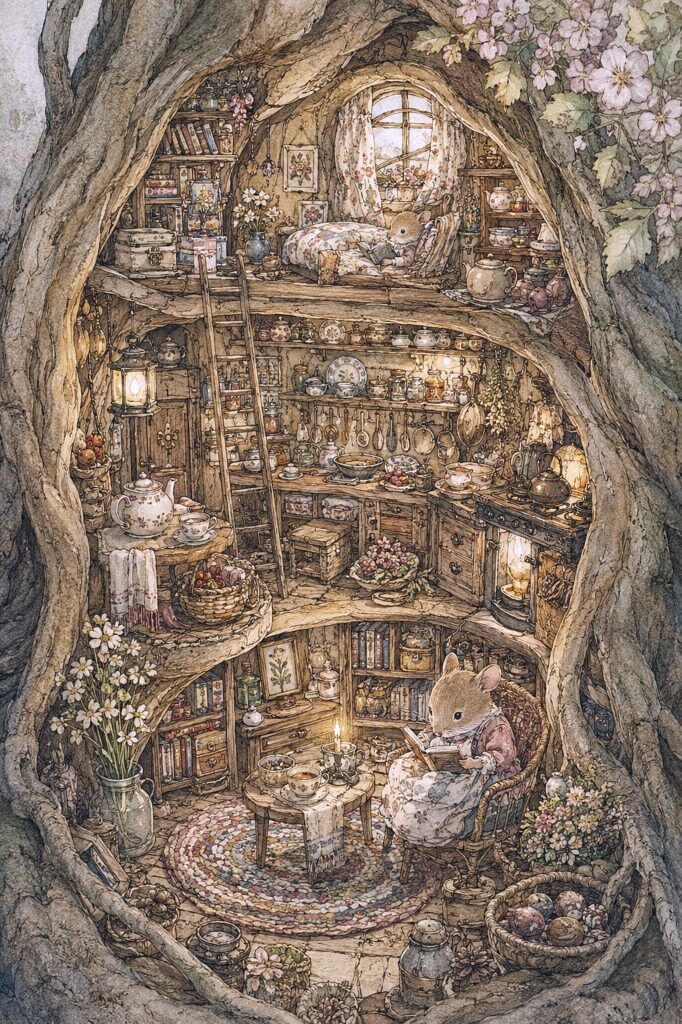
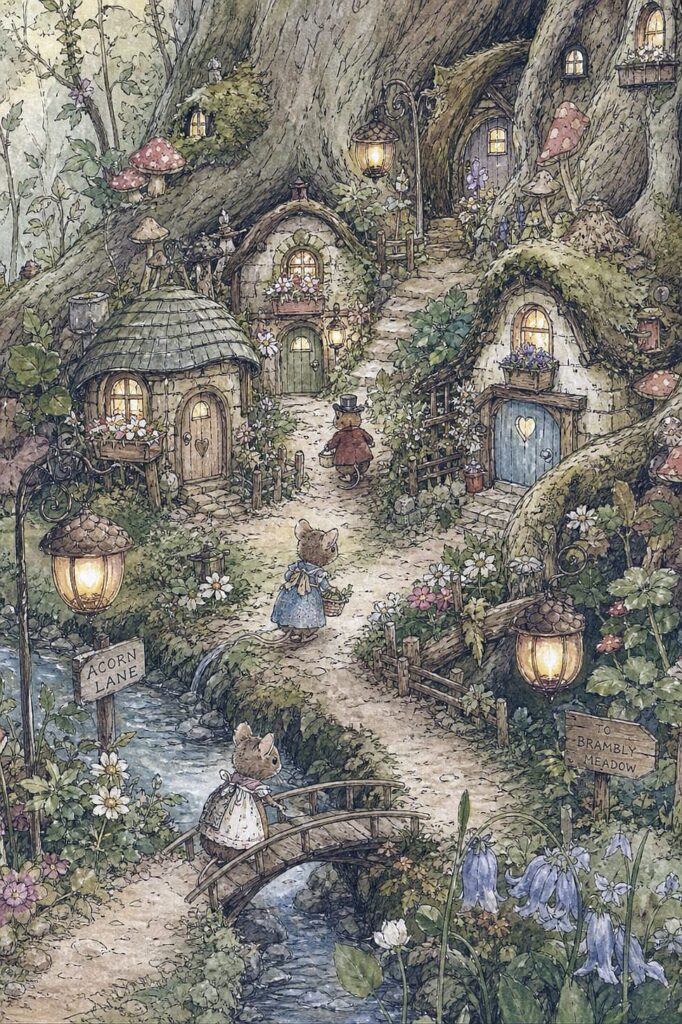
These scenes are especially Pinterest-friendly because they combine fantasy and design. You get the appeal of miniature architecture, glowing windows, flower pots, and winding paths all in one image. For artists, they are wonderful references for building atmosphere and scale in a gentle, inviting way.
Tea Parties, Picnics, and Woodland Gatherings
Group scenes bring warmth in a different way. Instead of focusing on a room or a home, they focus on shared moments.
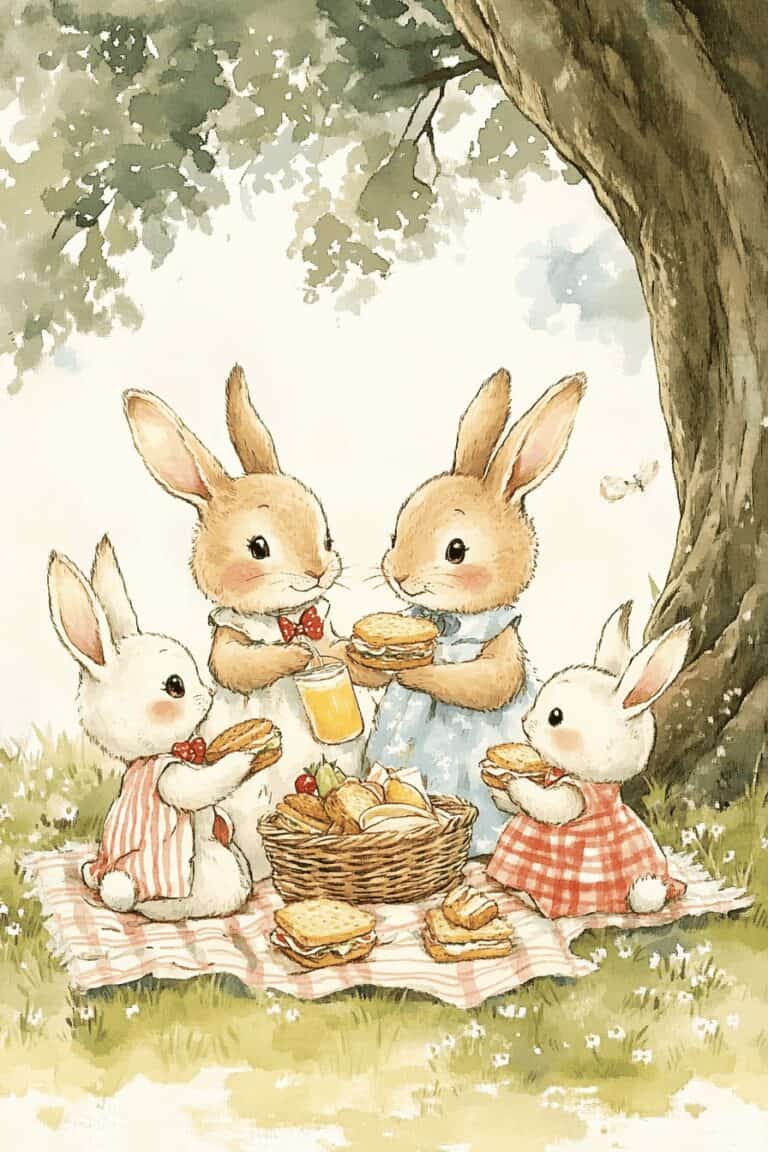
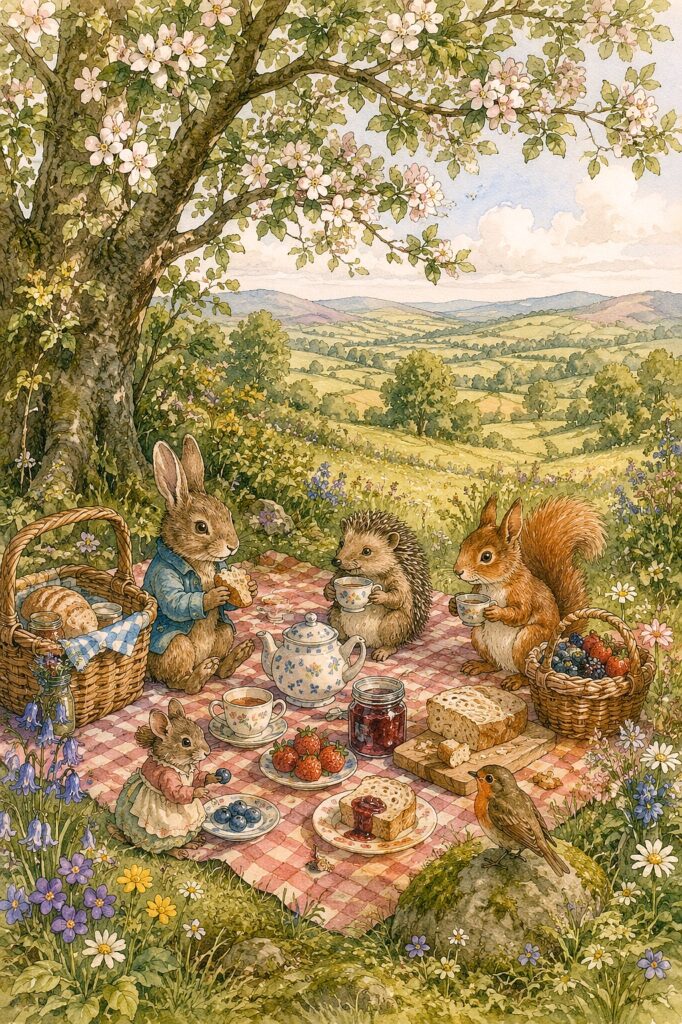
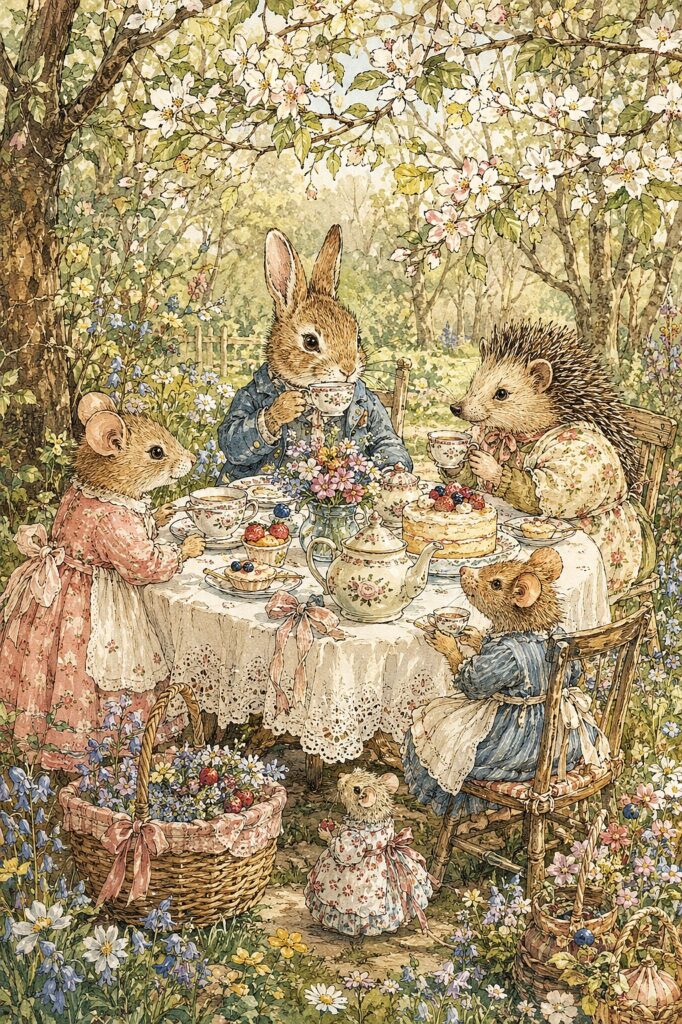
A tea table with cakes and berries, a picnic under blossoms, or a tiny birthday gathering in the woods all suggest celebration, friendship, and belonging. That emotional softness is a big part of the appeal.
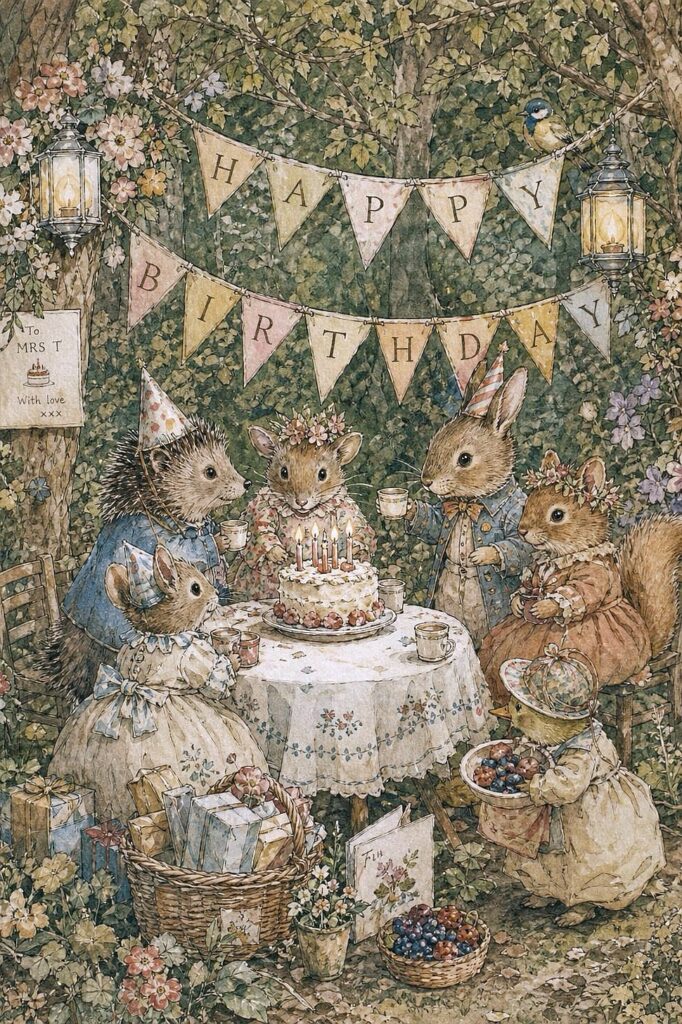
What I love about these scenes is that they feel cheerful without being loud. The details do the work.
A lace tablecloth, little plates, a basket of bread, wildflowers in jars, or bunting between branches can turn a simple setting into something full of life. This is where whimsical animal art often feels especially sweet and memorable.
Garden Corners and Flower-Filled Scenes
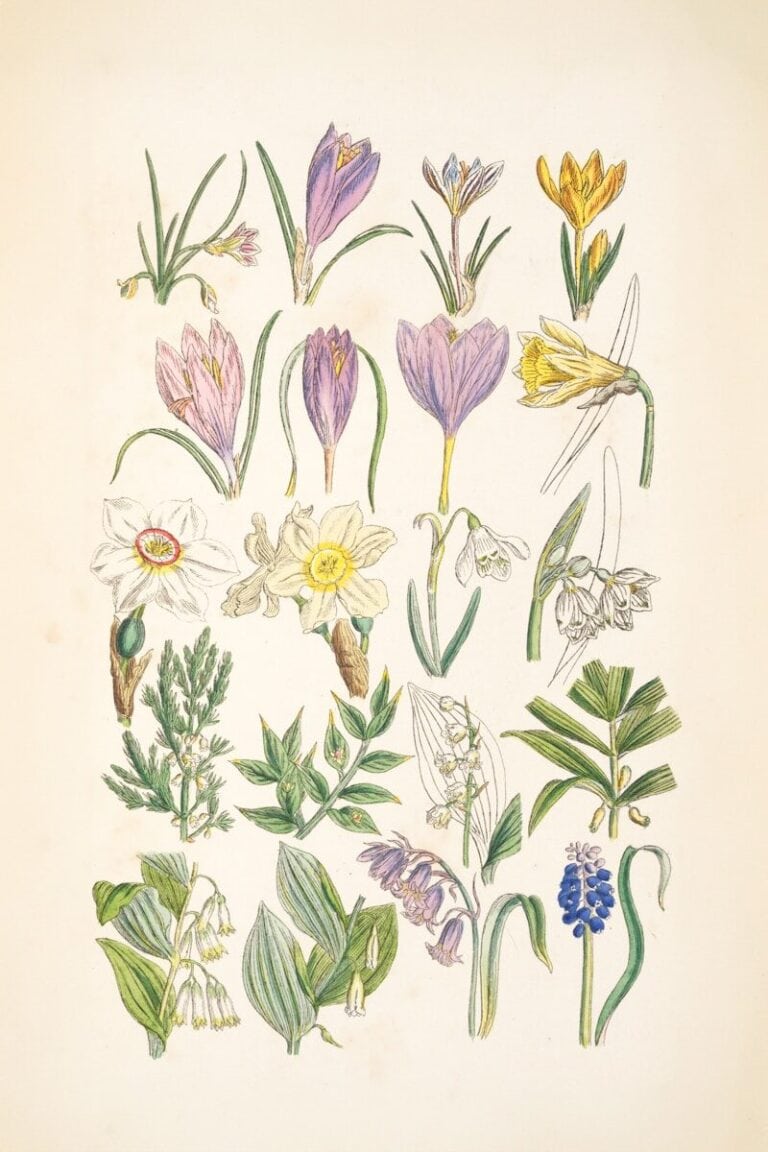
Flowers soften everything. They add color, shape, and a kind of quiet romance that fits perfectly with cottagecore illustration and vintage-inspired storybook illustration. Foxgloves, daisies, roses, bluebells, and herbs all bring that sense of gentle abundance that works so well in woodland scenes.
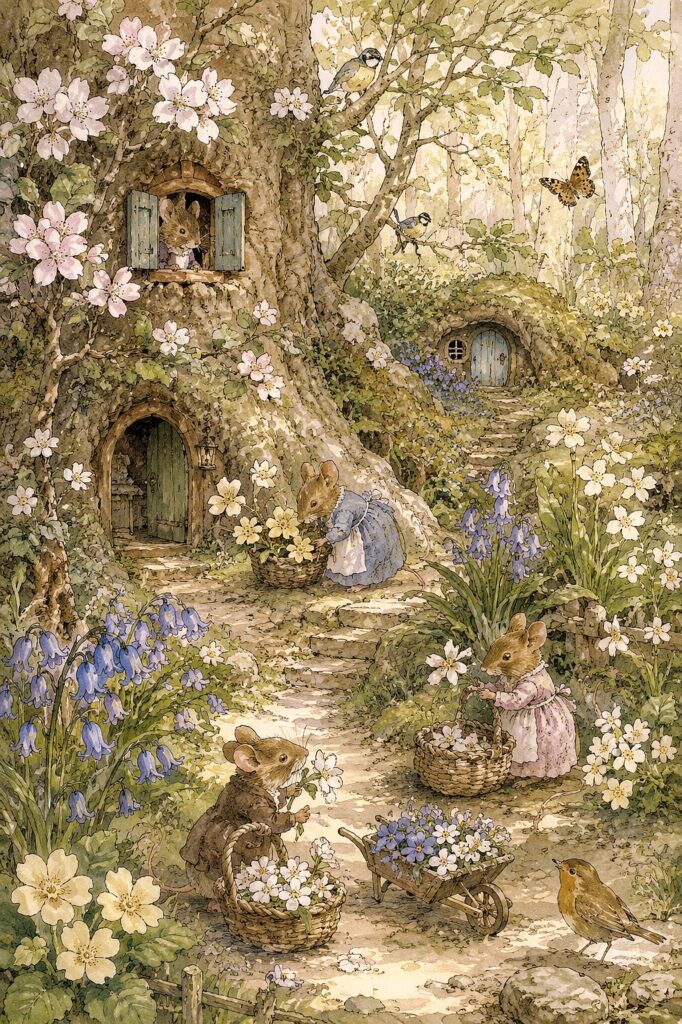
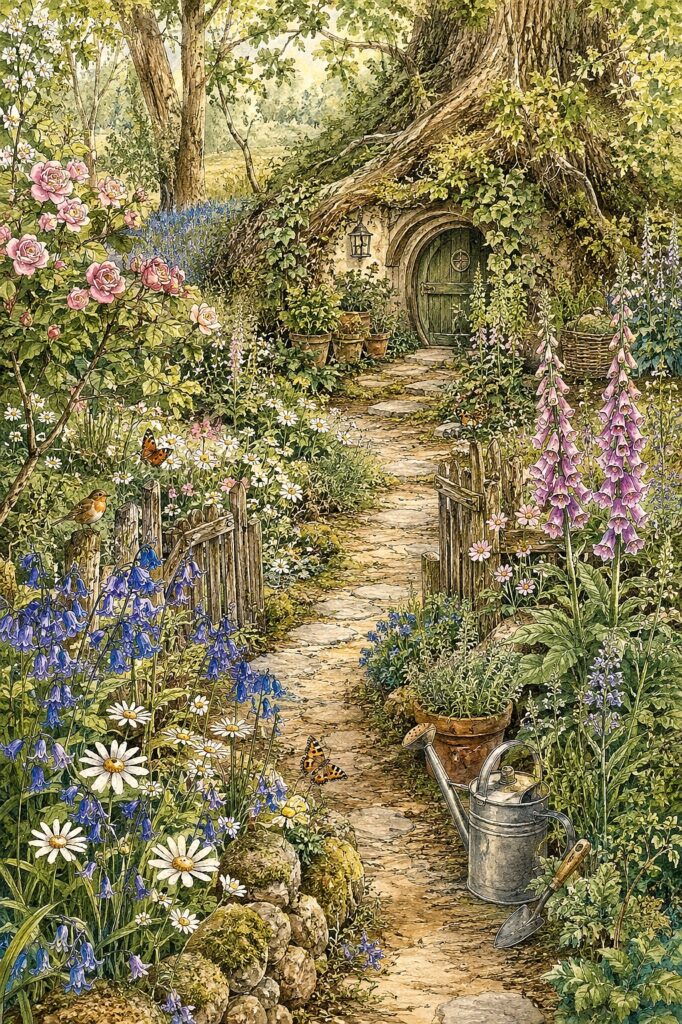
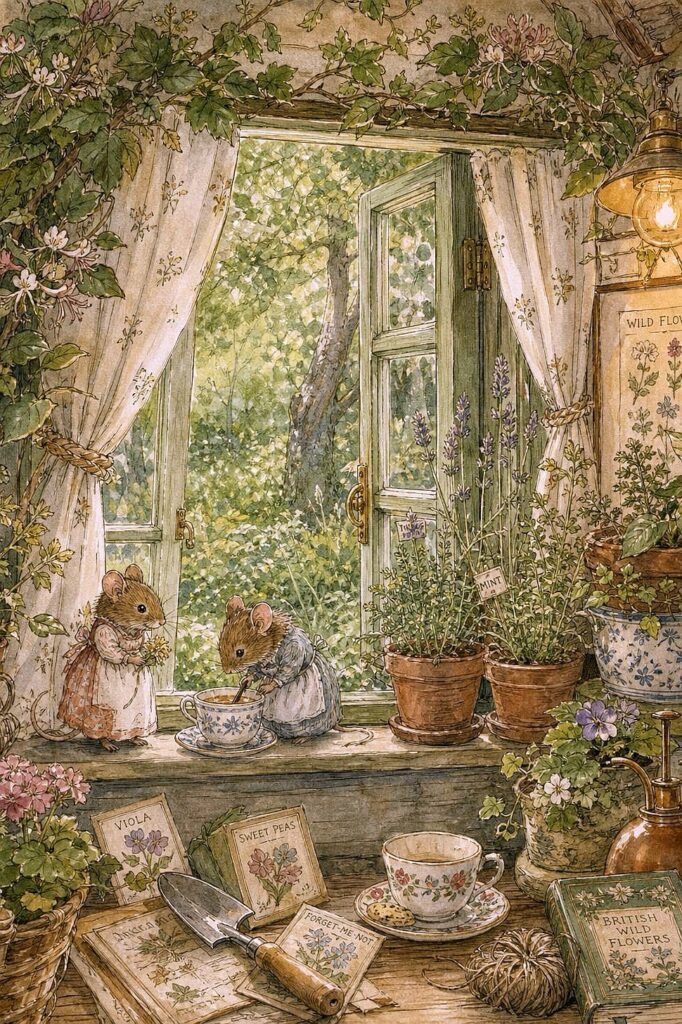
Garden corners are also wonderful because they connect indoors and outdoors. A window with little pots on the sill, vines climbing around a door, or a narrow path through cottage flowers helps the world feel connected and whole. It is not just decoration. It makes the setting feel cared for.
Detailed Storybook Rooms Full of Tiny Treasures
One of the real joys of this style is looking closer and finding more every time. A recipe book left open on a table, a basket by the fire, a sewing kit on a chair, or a half-finished cup of tea can make a room feel instantly human, even when the characters are tiny woodland animals. Those little treasures create story without needing explanation.
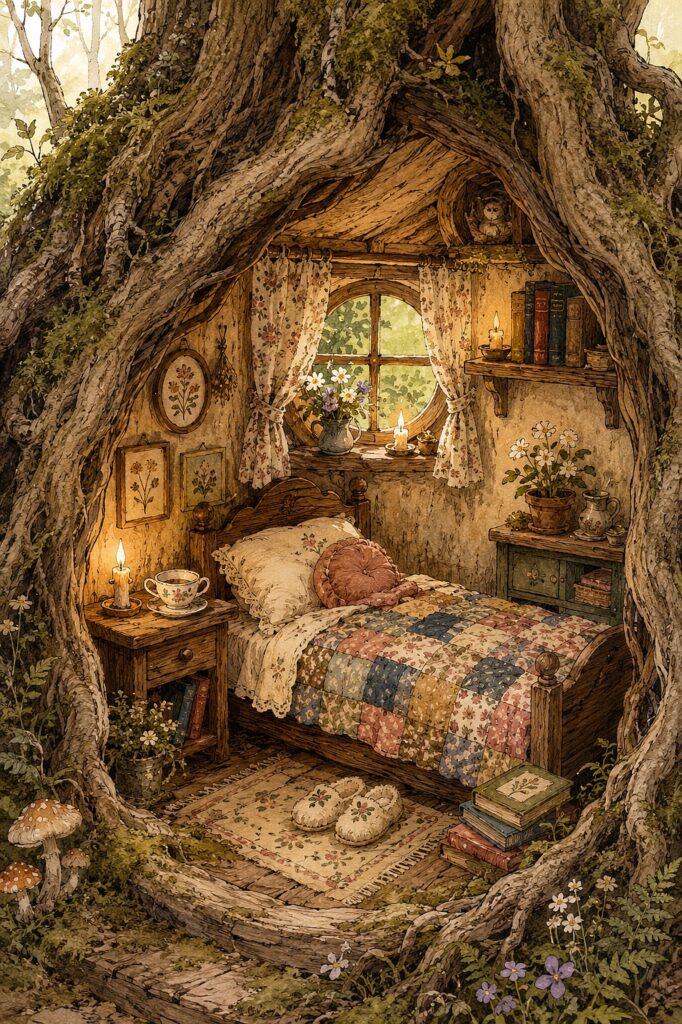
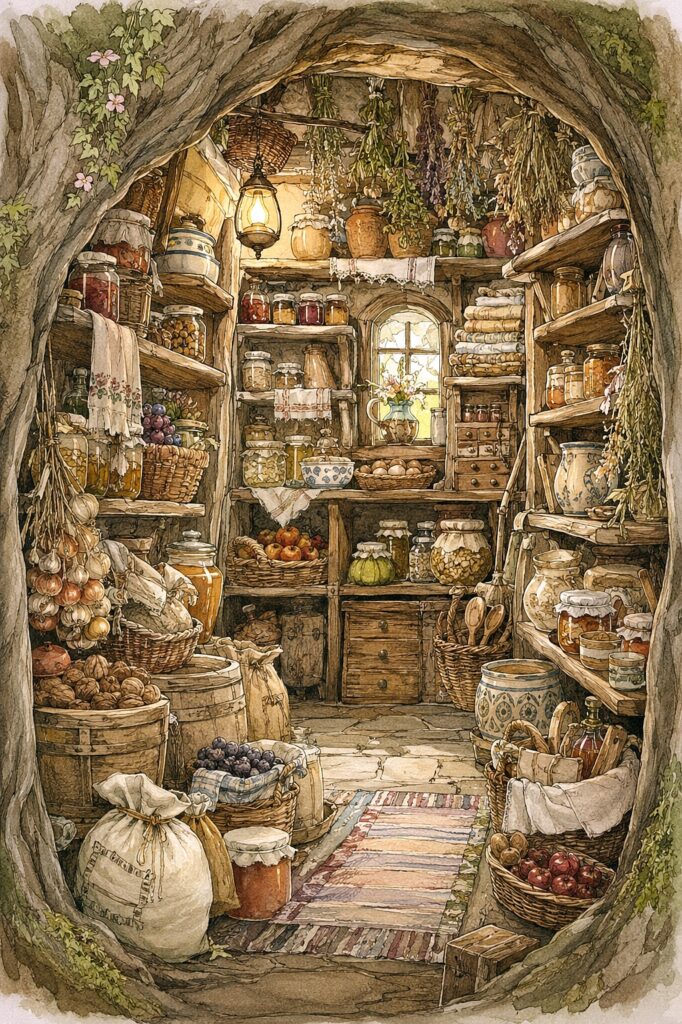
This is part of what sets vintage children’s book illustration apart from more minimal modern styles. The richness is not clutter for the sake of clutter. It is narrative detail. Every object hints at habits, personalities, and moments that happened before or after the scene you are looking at.
Soft Watercolor Woodland Animal Art
Animal characters bring emotion to these scenes in such a quiet, lovely way. They do not need exaggerated poses or big cartoon expressions.
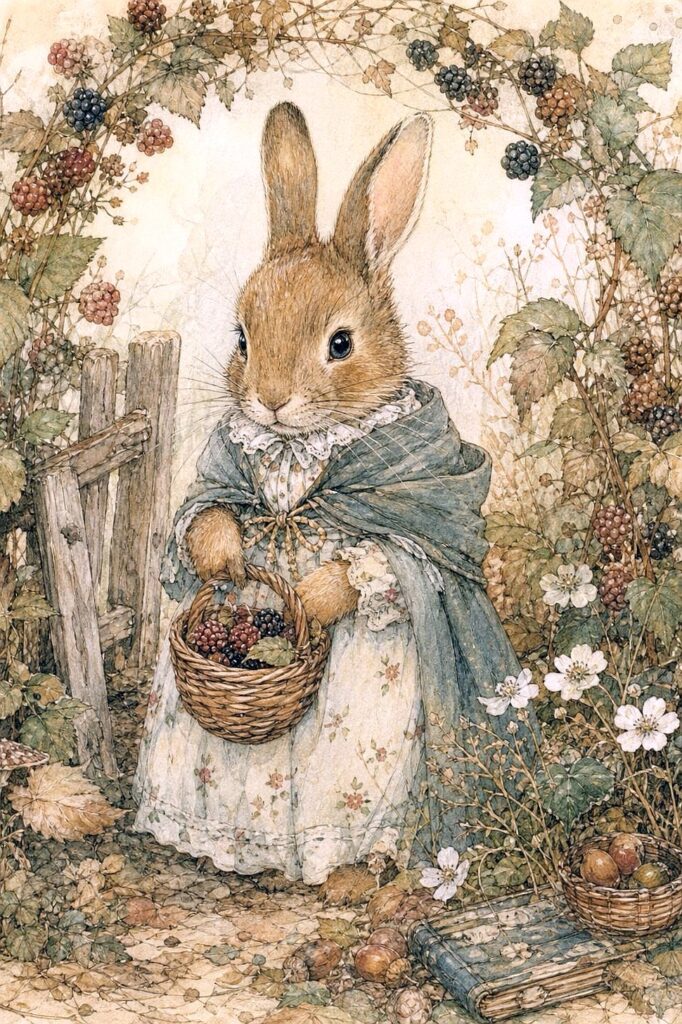
A mouse carrying a basket, a rabbit near a garden gate, or a squirrel pausing by a lantern can already suggest tenderness, purpose, or curiosity. That subtlety is part of the charm.
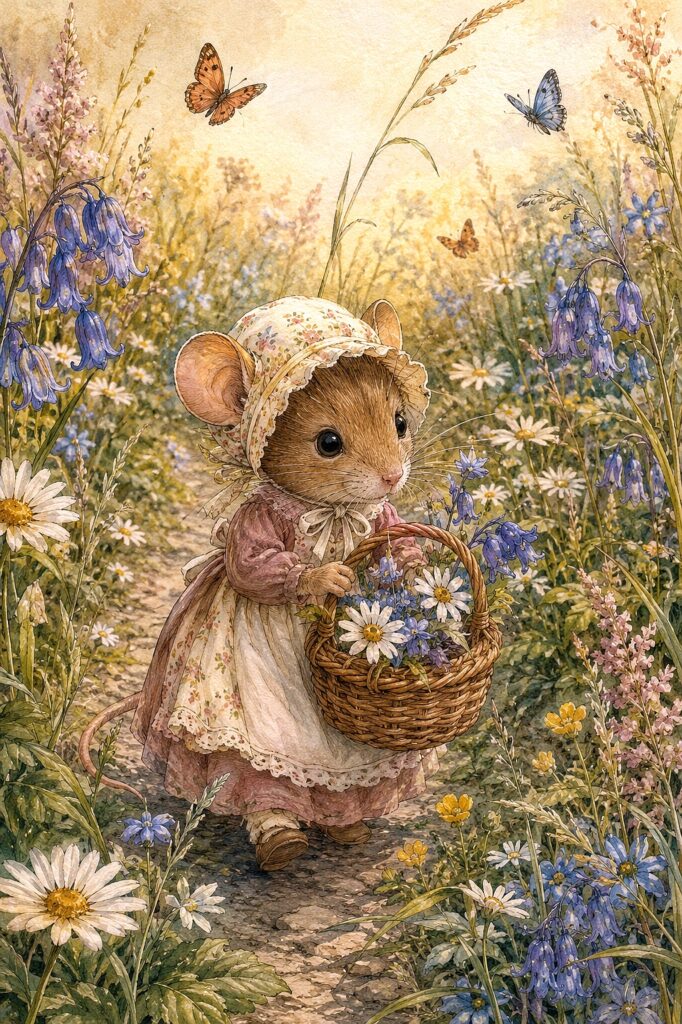
If you love Brambly Hedge inspired art, this is one of the most useful themes to study. Notice how gentle woodland creatures can feel expressive through posture, clothing, scale, and setting. The effect is soft and nostalgic rather than theatrical, which is exactly why it works so well.
Vintage Storybook Color Palettes
Color is doing a lot of quiet work in this kind of art. Cream, sage green, warm brown, dusty rose, faded blue, golden yellow, soft gray, berry red, and mossy green all help create that worn, welcoming mood.
The palette feels old-fashioned in the best way. Soft, earthy, and slightly faded colors make the whole scene feel gentle and timeless.
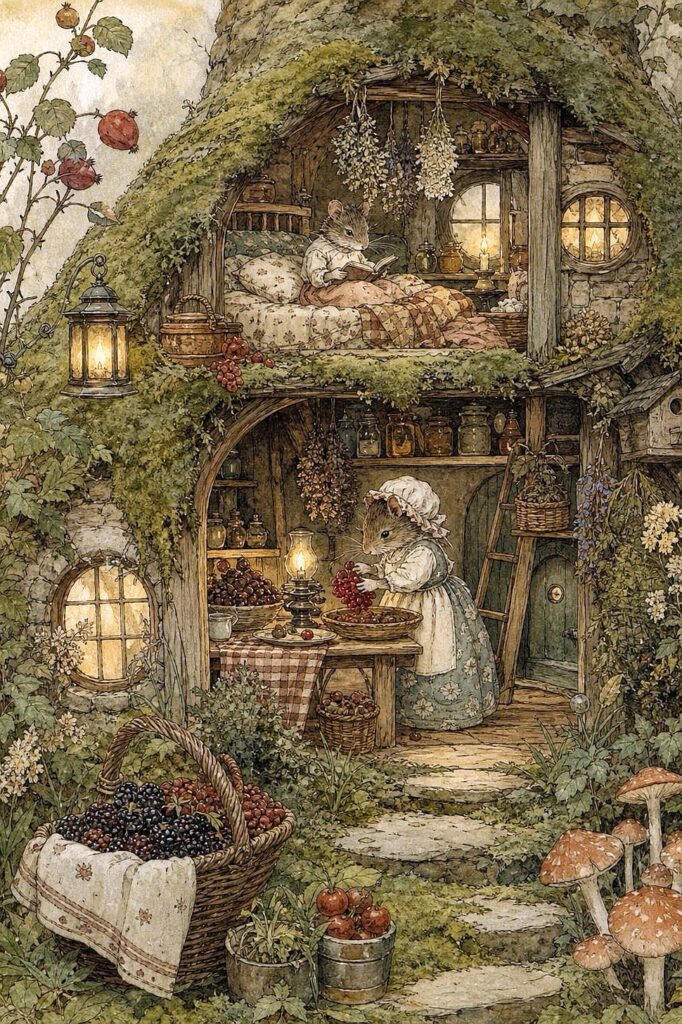
For artists, this is a great reminder that atmosphere often begins with restraint. A muted palette can make even a busy scene feel calm.
It also helps details like candlelight, flower petals, and patterned fabric stand out without overwhelming the eye. That is one of the reasons cozy art inspiration in this style is so easy to revisit again and again.
How to Use These Art Pieces for Inspiration
If you are collecting references for your own work, the best approach is to study what gives these scenes their feeling rather than trying to copy any exact image, character, or composition. That is where the real value is. The magic comes from the mood, the arrangement, and the tiny storytelling details.
A few things are especially worth noticing:
- Look at how small details tell a story. A letter on a table, herbs hanging to dry, or boots by the door can say a lot.
- Study how cozy interiors are arranged. Shelves, tables, windows, and chairs often create a natural sense of balance and warmth.
- Pay attention to seasonal palettes. Spring and winter scenes can have the same structure but feel completely different through color and texture.
- Notice borders, patterns, textures, and trim. Curtains, wallpaper, pantry labels, wood grain, and rug designs add so much personality.
- Save favorite images to moodboards. Group together interiors, gardens, palettes, and woodland homes to see what themes keep repeating.
- Ask what makes a space feel lived-in. Usually it is not one large feature. It is a collection of practical, everyday touches.
- Use inspiration ethically. Borrow the feeling, not exact copyrighted characters, scenes, or signature designs.
My Final Thoughts on Jill Barklem and Brambly Hedge-Inspired Art
There is a reason this style stays so beloved. It is gentle without being dull, detailed without feeling stiff, and nostalgic without losing its sense of life. The best Jill Barklem inspired art and Brambly Hedge inspired art capture tiny stories in every corner, whether that is a pantry shelf, a winter window, a garden path, or a lamp-lit room hidden under roots.
If you love storybook illustration, woodland illustration, and cozy vintage illustration, this kind of inspiration never really runs out. There is always another lovely detail to notice and another mood to save for later. Keep the art pieces that speak to you most, build a moodboard around them, and let them guide you toward your own warm, thoughtful take on storybook art.